


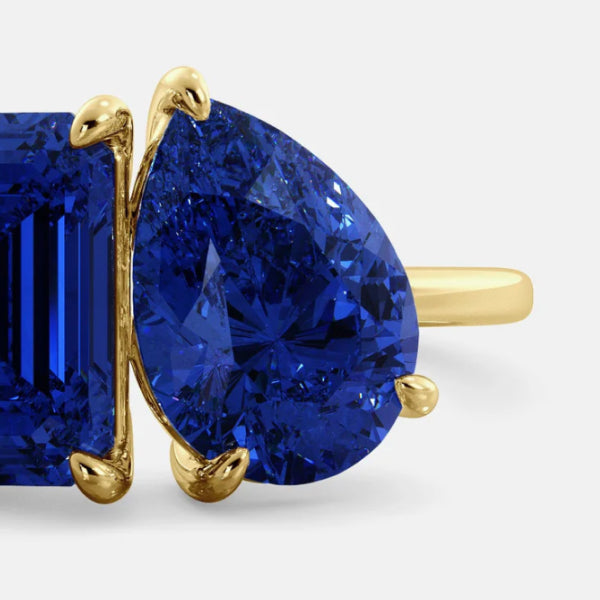


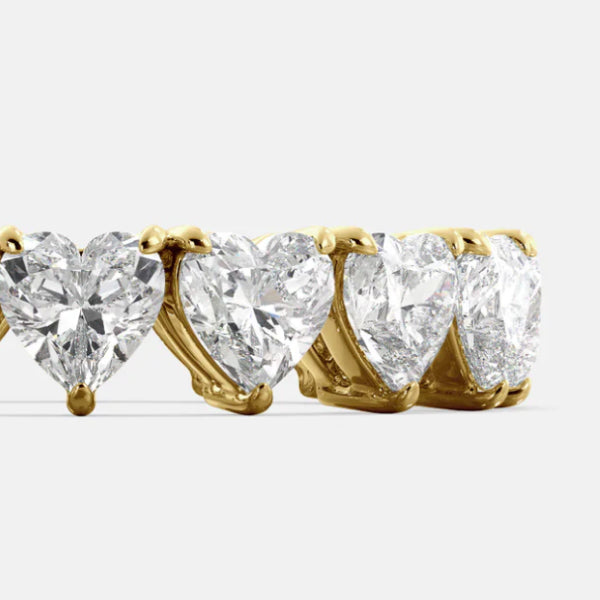

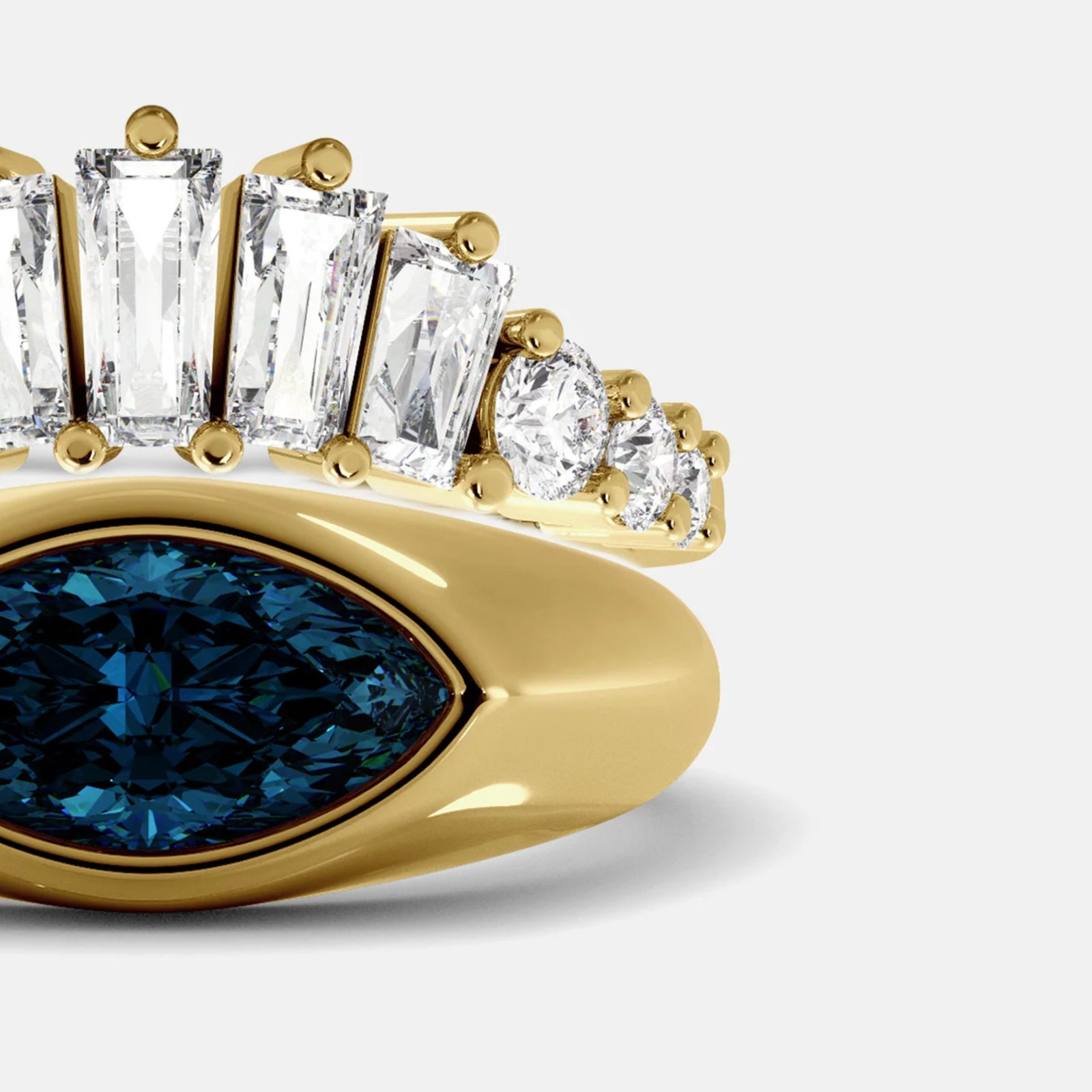

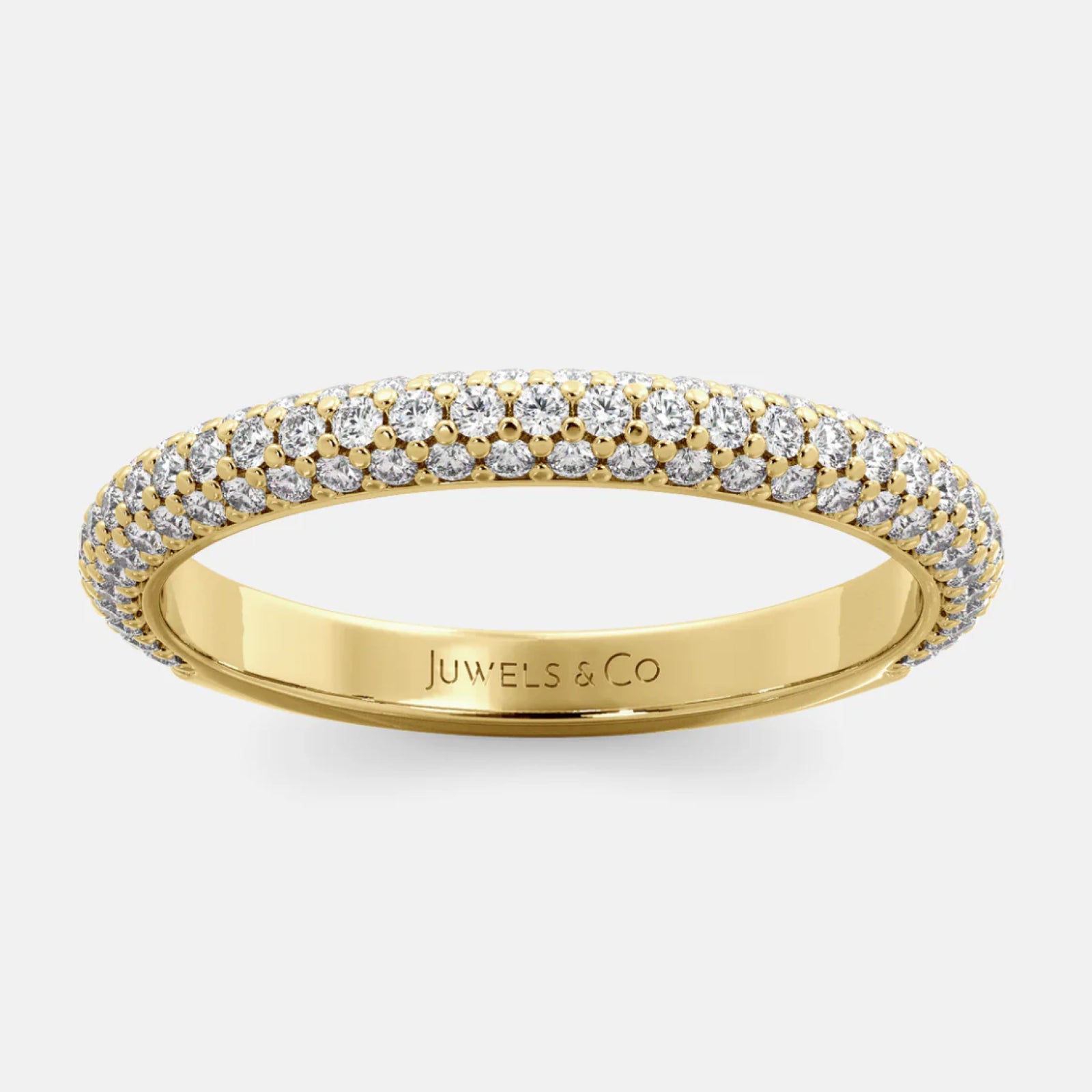

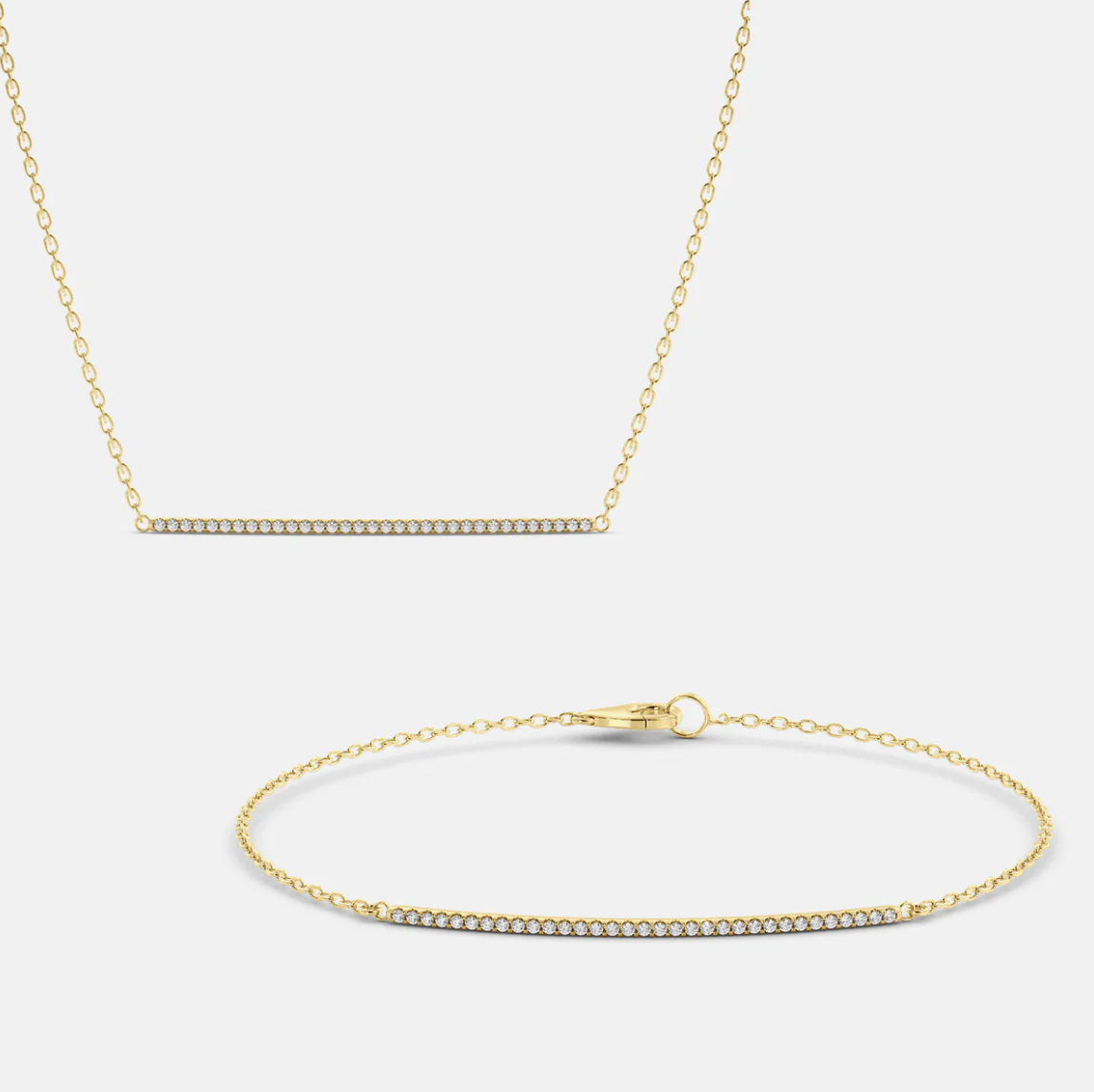

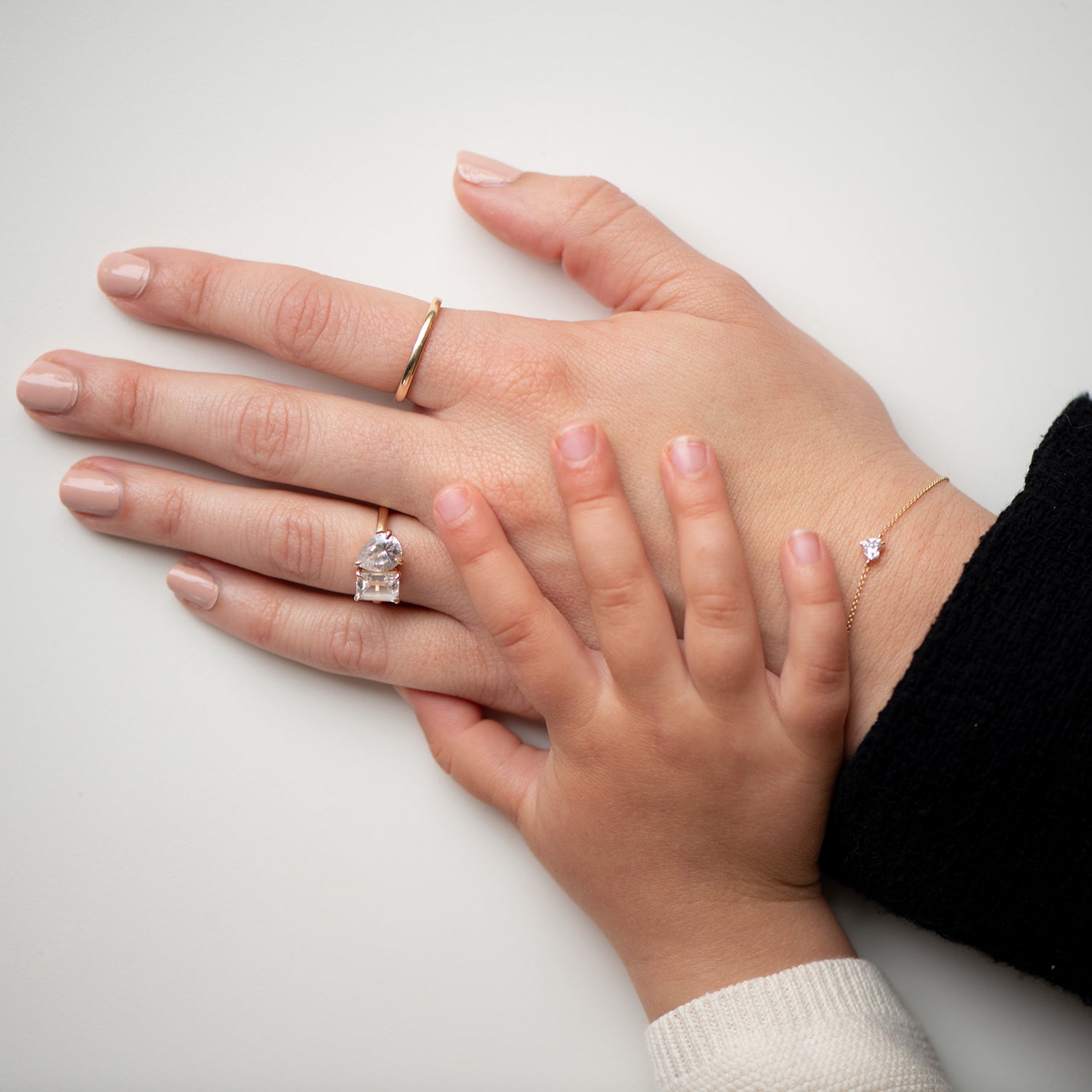







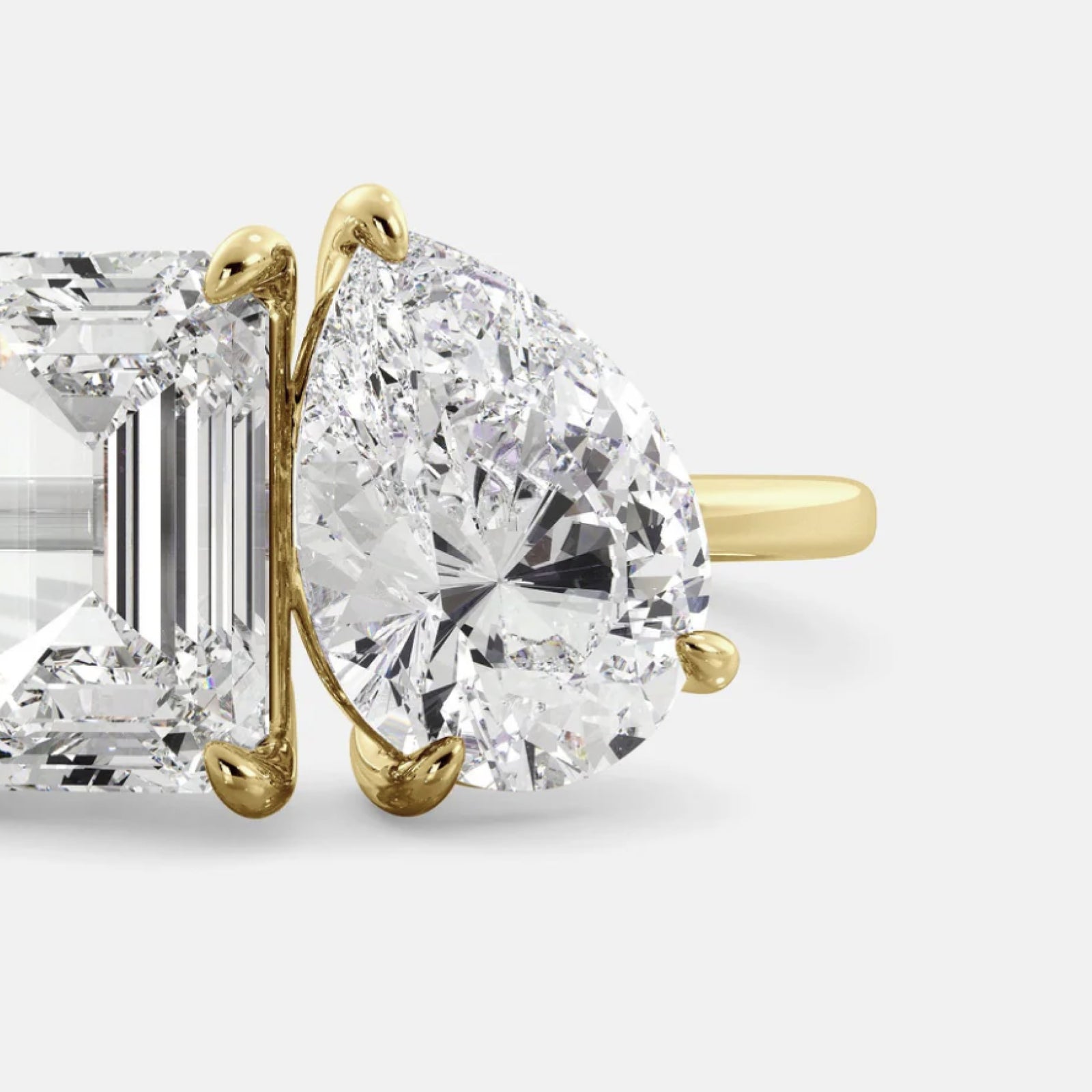

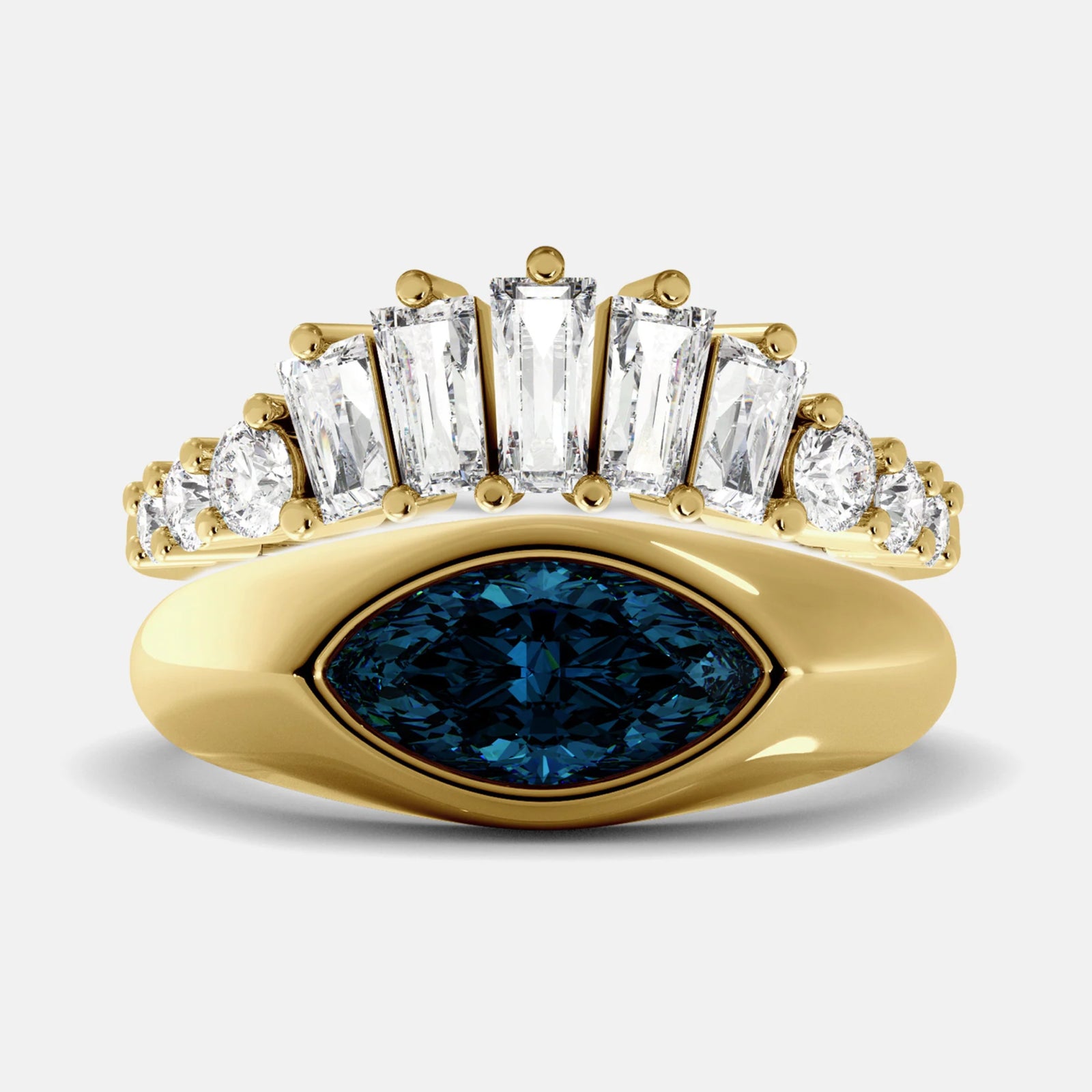












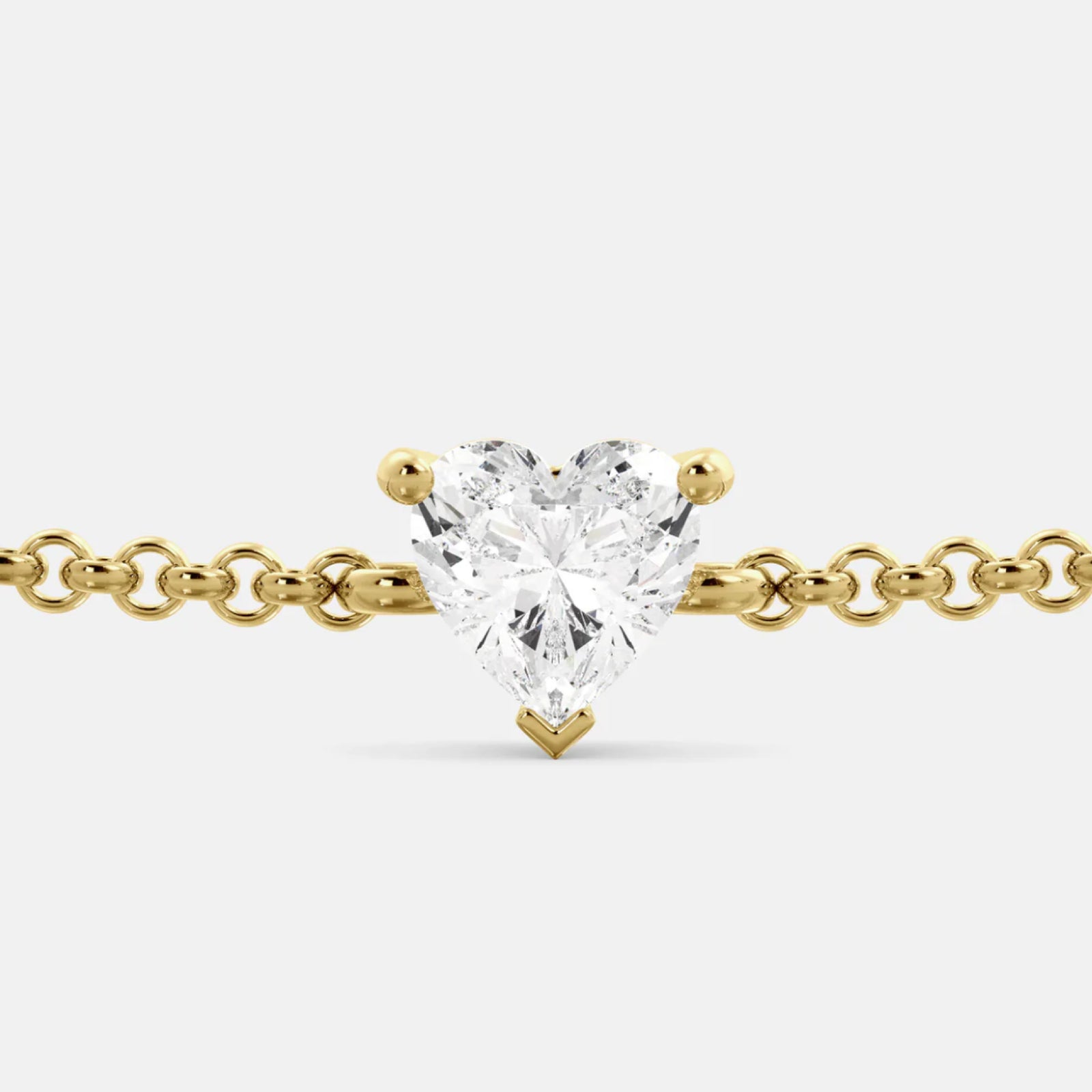

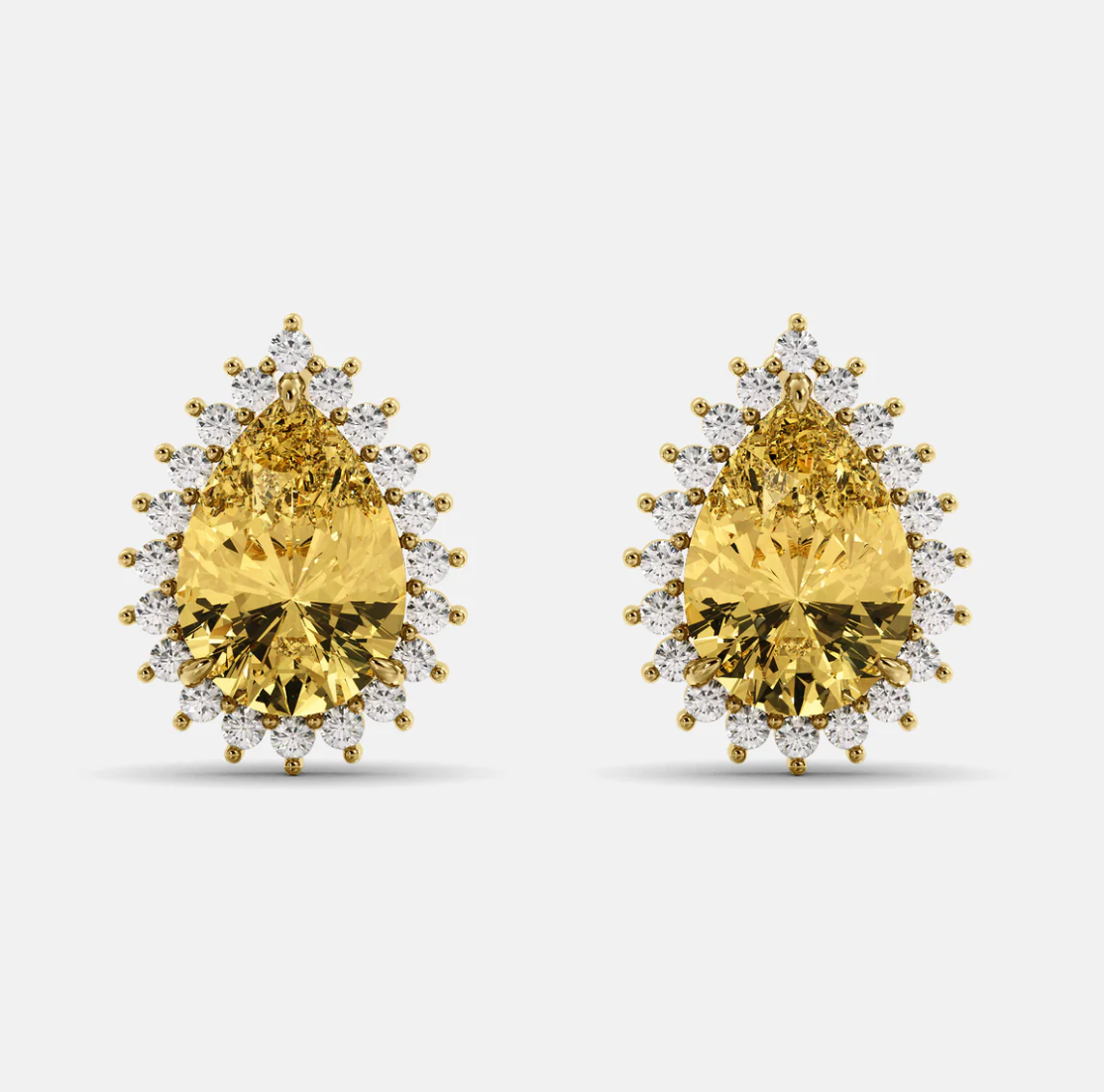

lab-grown diamonds and cubic zirconia are often mentioned in the same breath, but they are completely different materials. one is a diamond. one is not. here's what actually separates them — in composition, durability, appearance, and value over time.
at a glance, a lab-grown diamond and a cubic zirconia can look nearly identical. both are colorless or near-colorless. both are used as center stones. both are set in fine metal settings. the price difference between them can be dramatic — and that gap prompts a reasonable question: what exactly am I paying for?
the answer matters more than it might seem, particularly for pieces intended to last — engagement rings, meaningful gifts, pieces passed between generations. understanding what each material actually is changes how you evaluate what you're buying.
what is a lab-grown diamond?
a lab-grown diamond is a diamond. not a diamond simulant, not a diamond alternative — a diamond, chemically and physically identical to one formed underground over billions of years.
natural diamonds form under extreme heat and pressure deep within the earth's mantle over geological timescales. lab-grown diamonds are created by replicating those same conditions in a controlled environment — either through High Pressure High Temperature (HPHT) processing or Chemical Vapor Deposition (CVD). the result is a crystal of pure carbon arranged in the same lattice structure as a mined diamond.
- Chemical composition pure carbon — identical to a mined diamond. there is no chemical difference between a lab-grown and mined diamond.
- Hardness 10 on the Mohs scale — the hardest naturally occurring material. identical to a mined diamond.
- Optical properties same refractive index, same brilliance, same fire as a mined diamond. they cannot be distinguished visually, even by trained gemologists, without specialized equipment.
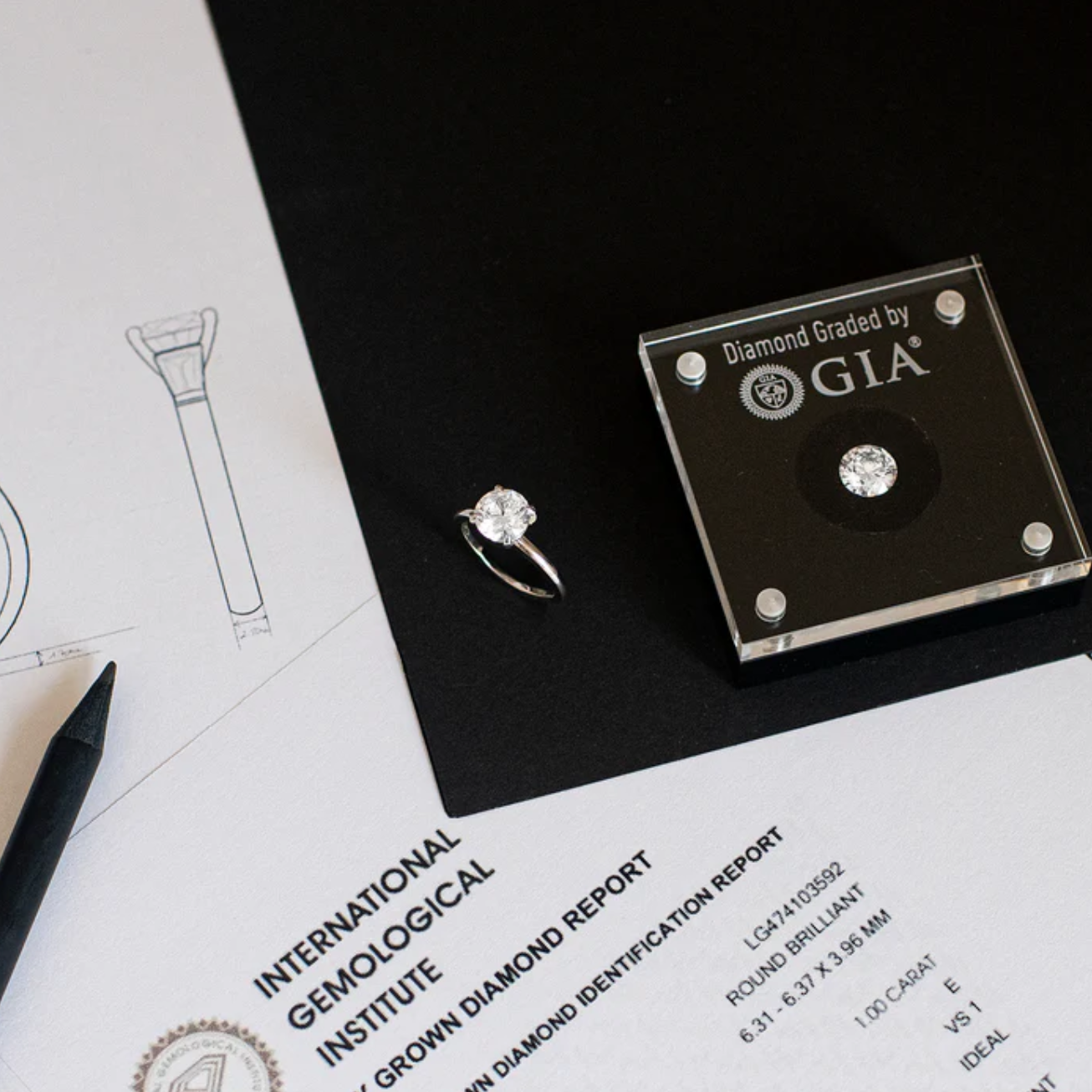
- Grading graded on the same GIA scale as mined diamonds — cut, color, clarity, and carat. a lab-grown diamond receives a certificate just as a mined diamond does.
what is cubic zirconia?
cubic zirconia (CZ) is a synthetic gemstone made from zirconium dioxide — a completely different material from diamond. it was developed in the 1970s as a diamond simulant: a stone designed to resemble a diamond visually at a fraction of the cost.
cubic zirconia is not a diamond, does not contain carbon, and does not share diamond's physical properties. it is a diamond simulant in the same category as moissanite or white sapphire — stones that can look similar to a diamond from a distance but differ significantly in composition and performance.
- Chemical composition zirconium dioxide (ZrO₂) — entirely different from diamond's carbon structure. not a diamond by any definition.
- Hardness 8–8.5 on the Mohs scale — significantly softer than a diamond. scratches and dulls with regular wear over time.
- Optical properties higher dispersion (fire) than diamond, which can make it appear more rainbow-colored in certain light. this is often what makes CZ look "fake" to a trained eye — the fire is too strong relative to its brilliance.
- Grading not graded on the GIA diamond scale. CZ is manufactured to specific standards but does not receive a diamond certificate.
side-by-side comparison
| Property | Lab-Grown Diamond | Cubic Zirconia |
|---|---|---|
| Material | Carbon (diamond) | Zirconium dioxide |
| Is it a diamond? | Yes | No |
| Hardness (Mohs) | 10 | 8–8.5 |
| Scratches over time? | No | Yes |
| Dulls over time? | No | Yes — surface hazing with wear |
| GIA grading | Yes | No |
| Refractive index | 2.42 | 2.15–2.18 |
| Brilliance | High — same as mined diamond | Good initially, degrades with wear |
| Resale value | Some intrinsic value | None |
| Price point | Moderate — 50–80% less than mined | Very low |
| Longevity | Lifetime — no degradation | Typically 2–5 years before visible wear |
how they look — and how they age
on day one, under certain light conditions, a high-quality cubic zirconia and a lab-grown diamond can look very similar. both are colorless, both sparkle, both reflect light with presence.
the differences become clearer on closer inspection and over time.
Fire vs. brilliance
diamonds are valued for their combination of brilliance (white light return) and fire (colored light dispersion). cubic zirconia has a higher dispersion rate than diamond, which makes it show more rainbow-colored flashes — the "disco ball" effect that often gives CZ away to an experienced eye. a diamond's light return is more balanced: bright, white, and clear.
How they age
this is where the gap widens most significantly. diamond — whether mined or lab-grown — is the hardest material on earth and does not scratch or dull. a diamond engagement ring worn daily for thirty years looks the same as it did on day one, with normal cleaning.
cubic zirconia, at 8–8.5 on the Mohs scale, scratches over time from contact with everyday materials (dust, metal, other surfaces). the scratches accumulate and create a haze on the surface that cannot be polished out without professional re-cutting. most cubic zirconia pieces worn daily look noticeably worn within 2–5 years.
durability and everyday wear
for a piece worn occasionally — a fashion ring, a costume piece, something worn a few times a year — cubic zirconia is a practical and affordable choice. the wear it accumulates from infrequent use is minimal and the visual effect holds up well.
for daily wear — an engagement ring, a wedding band, a ring worn every day — the durability difference is significant and compounds over time.
- Lab-grown diamond — daily wear maintains its appearance indefinitely. does not scratch, does not haze, does not require replacement. the same stone worn at 25 will look identical at 55. the setting may require maintenance (prong checks, polishing) but the stone itself is permanent.
- Cubic zirconia — daily wear begins to show surface scratching within months to years depending on activity level. the haze that develops is caused by micro-abrasions across the surface — each individually invisible, collectively dulling. the stone typically needs replacing within 3–5 years of regular daily wear.
value and what you're investing in
cubic zirconia has essentially no resale or intrinsic value. it is a manufactured material produced at very low cost — the price reflects the setting and craftsmanship, not the stone.
lab-grown diamonds have intrinsic value as diamonds, though currently lower than equivalent mined diamonds as supply has increased. they are certified, gradeable, and carry some material worth. they are not primarily purchased as financial investments — but they hold their identity as diamonds, which cubic zirconia does not.
for fine jewelry intended to be meaningful, to be kept, and to be worn for years or decades, the relevant question isn't resale value — it's longevity of experience. a piece that looks the same in twenty years carries a different kind of value than one that needs the stone replaced every few years.
which one to choose
the right choice depends on what the piece is for.
- Choose cubic zirconia if you want a beautiful, affordable piece for occasional wear — fashion jewelry, a costume piece, a ring you'll wear a few times a year. the visual effect is strong and the price is accessible. it's a practical choice for pieces not intended for daily long-term wear.
- Choose a lab-grown diamond if you want a diamond — a stone that will maintain its appearance and identity for a lifetime — at a more accessible price than a mined stone. lab-grown diamonds cost 50–80% less than equivalent mined diamonds, making the jump from CZ to a real diamond more achievable than many people expect. for any piece meant to last, worn daily, or carrying personal significance, a lab-grown diamond is the right choice.
frequently asked questions
is cubic zirconia a real diamond?
can you tell the difference between a lab-grown diamond and cubic zirconia?
how long does cubic zirconia last?
is a lab-grown diamond better than cubic zirconia?
why is cubic zirconia so much cheaper than a lab-grown diamond?
does a lab-grown diamond test as a diamond?
does juwels & co use lab-grown diamonds or cubic zirconia?
can you replace cubic zirconia with a lab-grown diamond?
real diamonds. made differently.
lab-grown diamonds in solid 14k gold, handcrafted in los angeles. the same material as a mined diamond — made with intention, at a price that reflects how the industry has changed.


