

























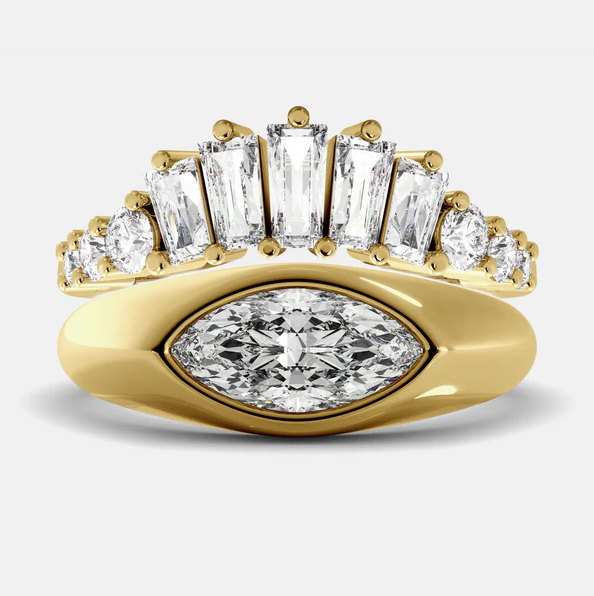

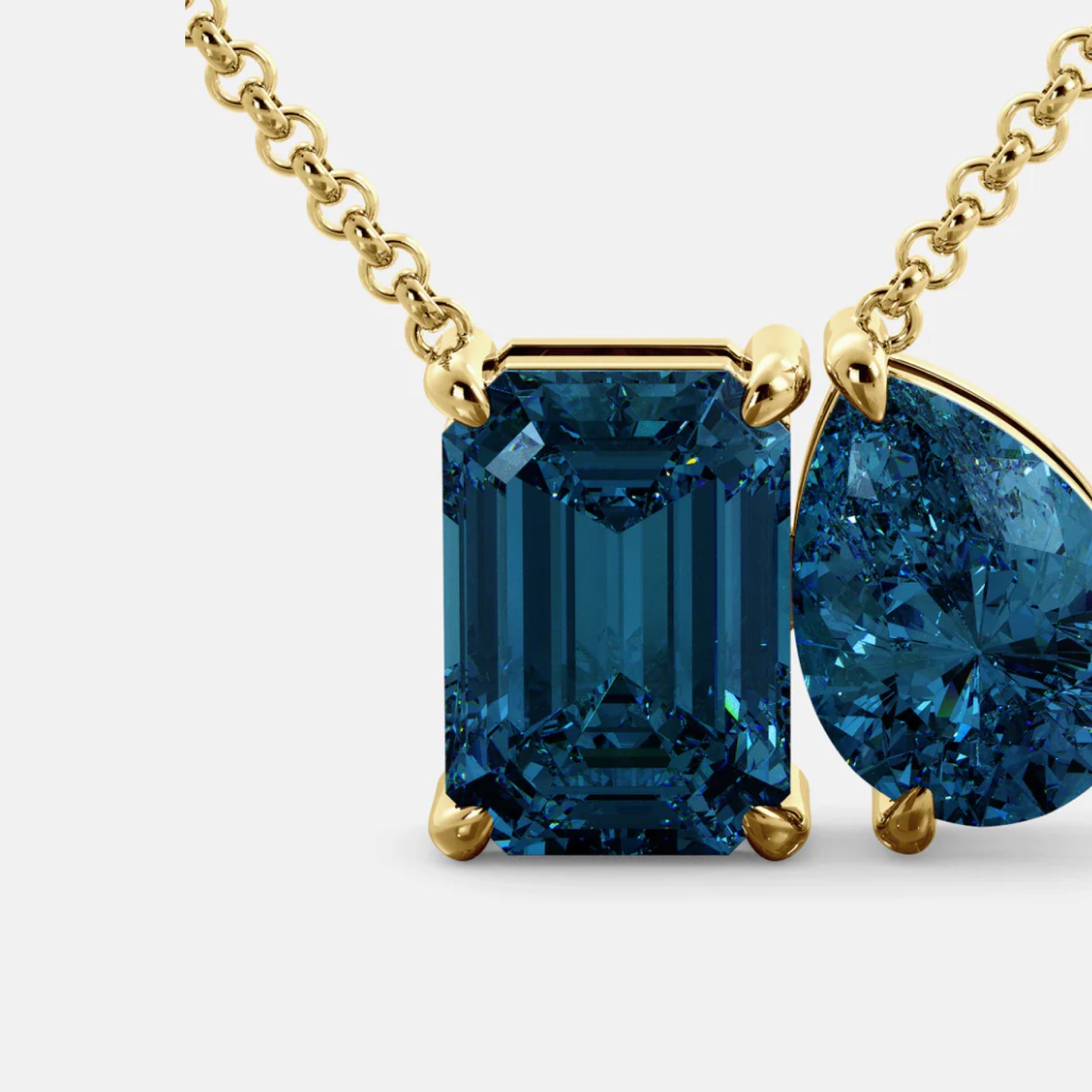

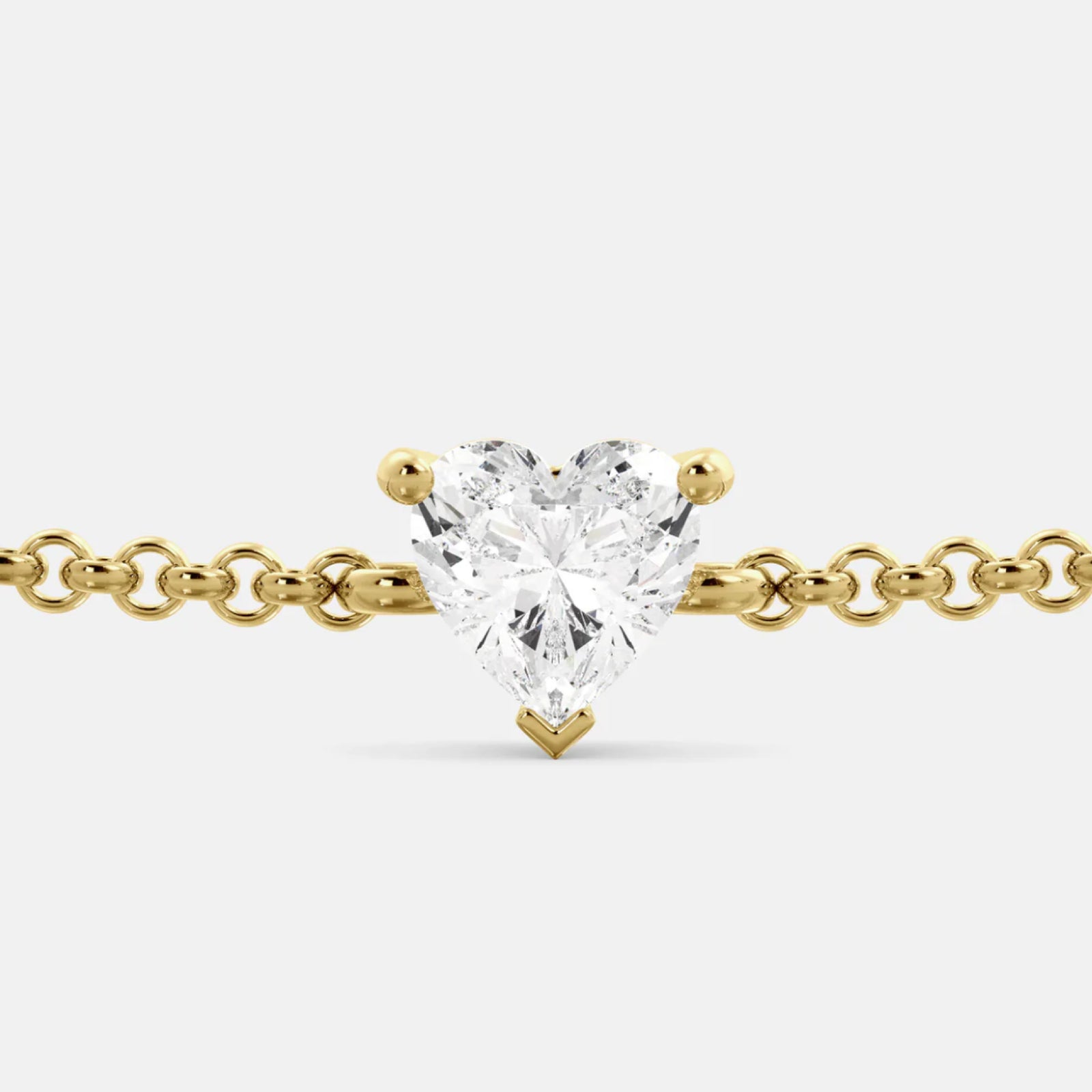

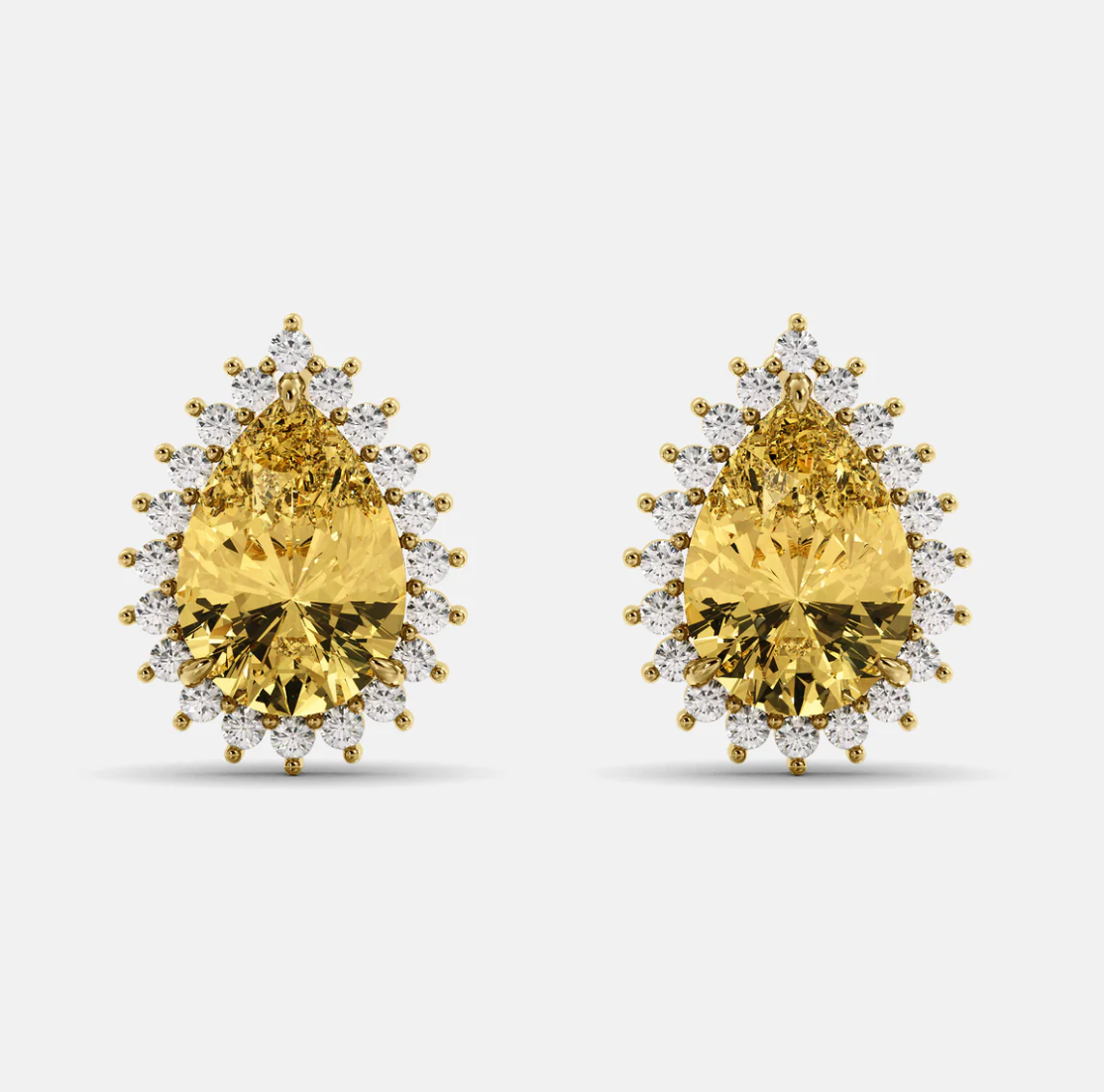

the real wedding, the real band
taylor swift and travis kelce married on july 3, 2026 — and her wedding band turned out to be its own quiet statement, worn without being stacked against her engagement ring.
the engagement ring moment has come and gone. the photographs went everywhere, the old mine cut had its cultural moment, the searches spiked and settled. taylor swift and travis kelce married on july 3, 2026, at madison square garden in new york city — and now that the wedding itself has happened, the conversation has shifted again, this time to what she actually wore alongside that ring.
the wedding band is the piece that sits next to her engagement ring every day for the rest of her life. it's the piece that has to work — visually, physically, practically. and it's the decision that more people get wrong, or leave too late, than almost any other in the jewelry process.

the wedding — what actually happened
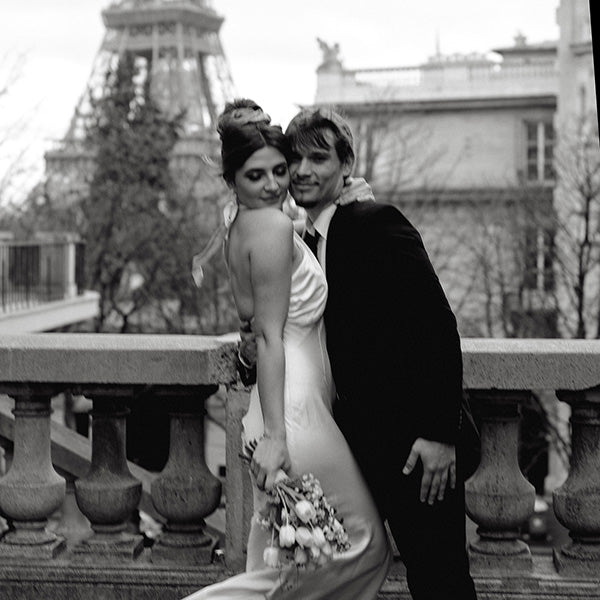
taylor swift and travis kelce announced their engagement on instagram on august 26, 2025, after two years of dating. they married on friday, july 3, 2026, at madison square garden in new york city, in a ceremony officiated by adam sandler. the venue was transformed into a garden setting for roughly 1,000 guests, with austin swift standing as "man of honor" and jason kelce serving as best man. swift wore christian dior haute couture.
her engagement ring — an old mine brilliant-cut diamond in a yellow gold setting, estimated between $250,000 and $550,000 — was the ring everyone analyzed. vintage in cut, warm in metal, quietly personal rather than loudly extravagant.
the engagement ring told us something about her taste. it said: vintage, considered, individual. the wedding band had to speak the same language.
and, based on wedding-day coverage, it did — in an unexpected way. reports describe her actual wedding band as a diamond design close in scale to her engagement stone but a visibly different diamond, rather than a plain metal band chosen purely to defer to the engagement ring. more notably: she reportedly chose not to stack the two rings together, wearing each as its own piece rather than combining them into a single set on one finger — a quiet departure from the traditional stacked-bridal-set look.
that choice is worth sitting with, because it applies to every person wearing an engagement ring right now, not just taylor swift: a wedding band doesn't have to disappear next to your ring, or even sit directly against it. it just has to feel like it belongs to the same story.
what band suits her ring?
taylor's old mine cut diamond in yellow gold is a vintage piece with a specific character. it's not a modern, high-contrast solitaire. it has warmth, softness, and a slightly asymmetrical presence that comes from being hand-cut rather than machine-cut.
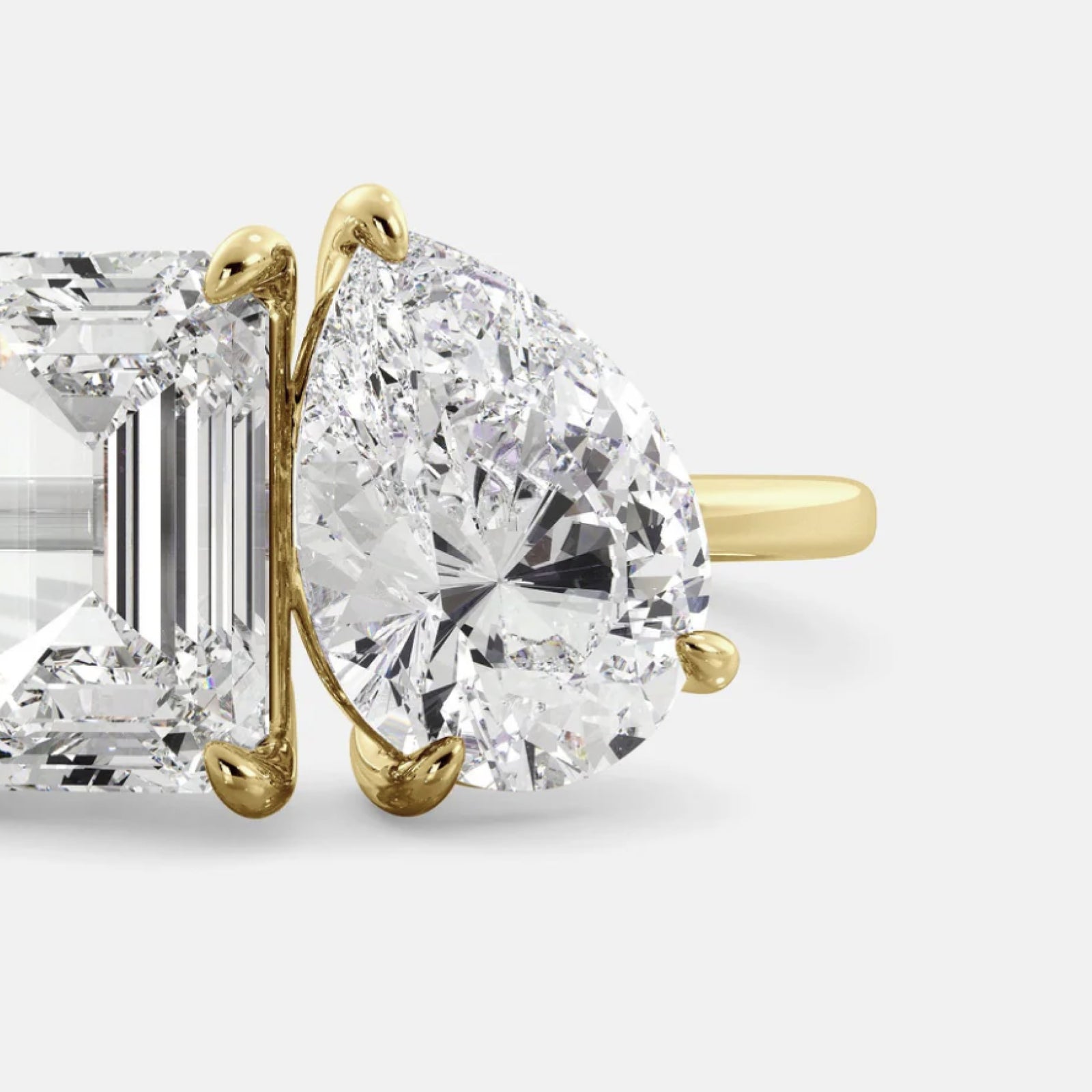
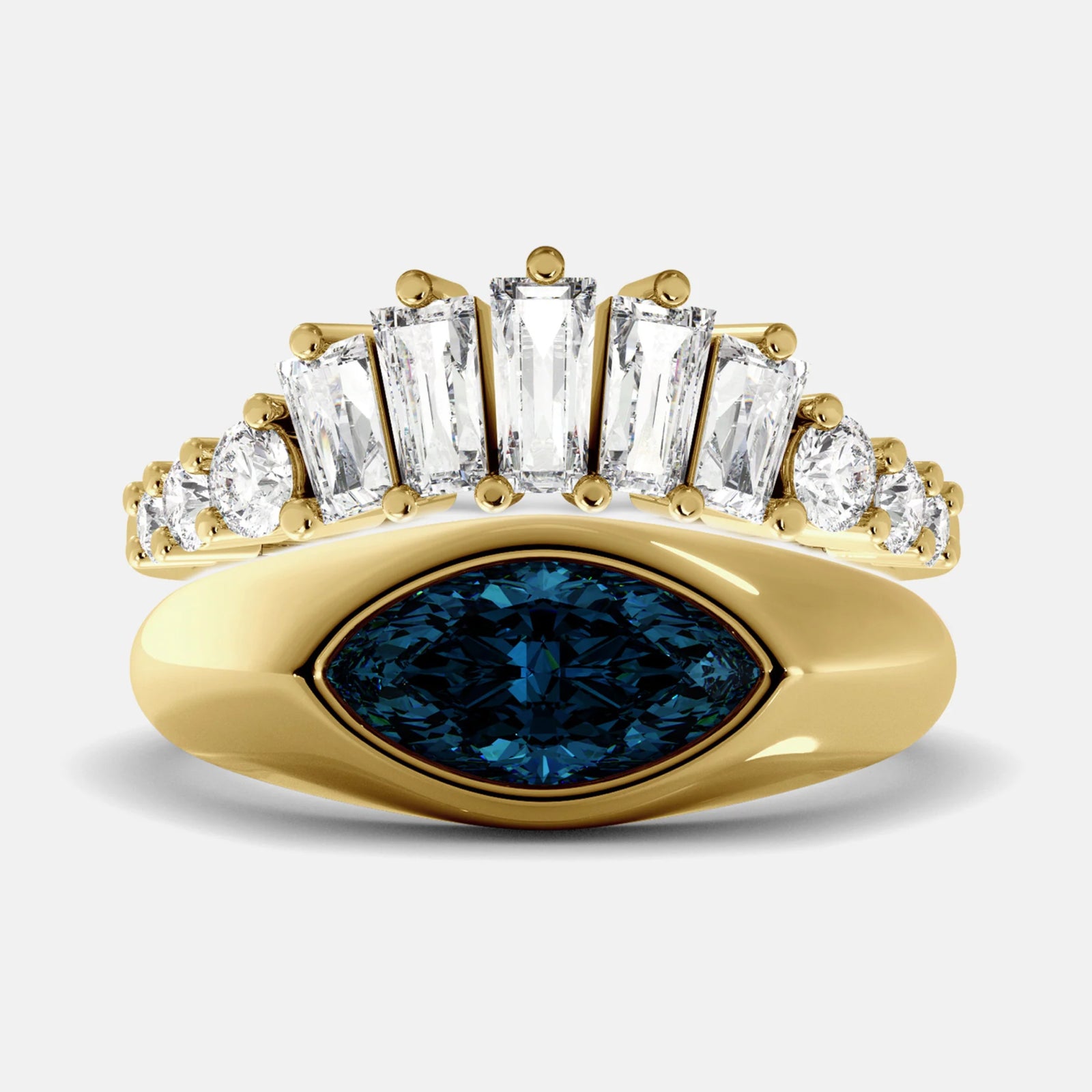
a band for this ring needs to complement that character rather than fight it — whether or not it's worn stacked. a few directions that work well for old mine cuts and yellow gold settings, all available as real, made-to-order pieces in our wedding bands collection:
A plain solid gold band
the most timeless choice. a simple, well-proportioned yellow gold band lets the engagement ring remain the focal point while adding presence and completing the set. it photographs beautifully, wears beautifully, and never dates. for an old mine cut, this is often the most elegant answer — the band recedes and the stone leads.

A curved or contour band
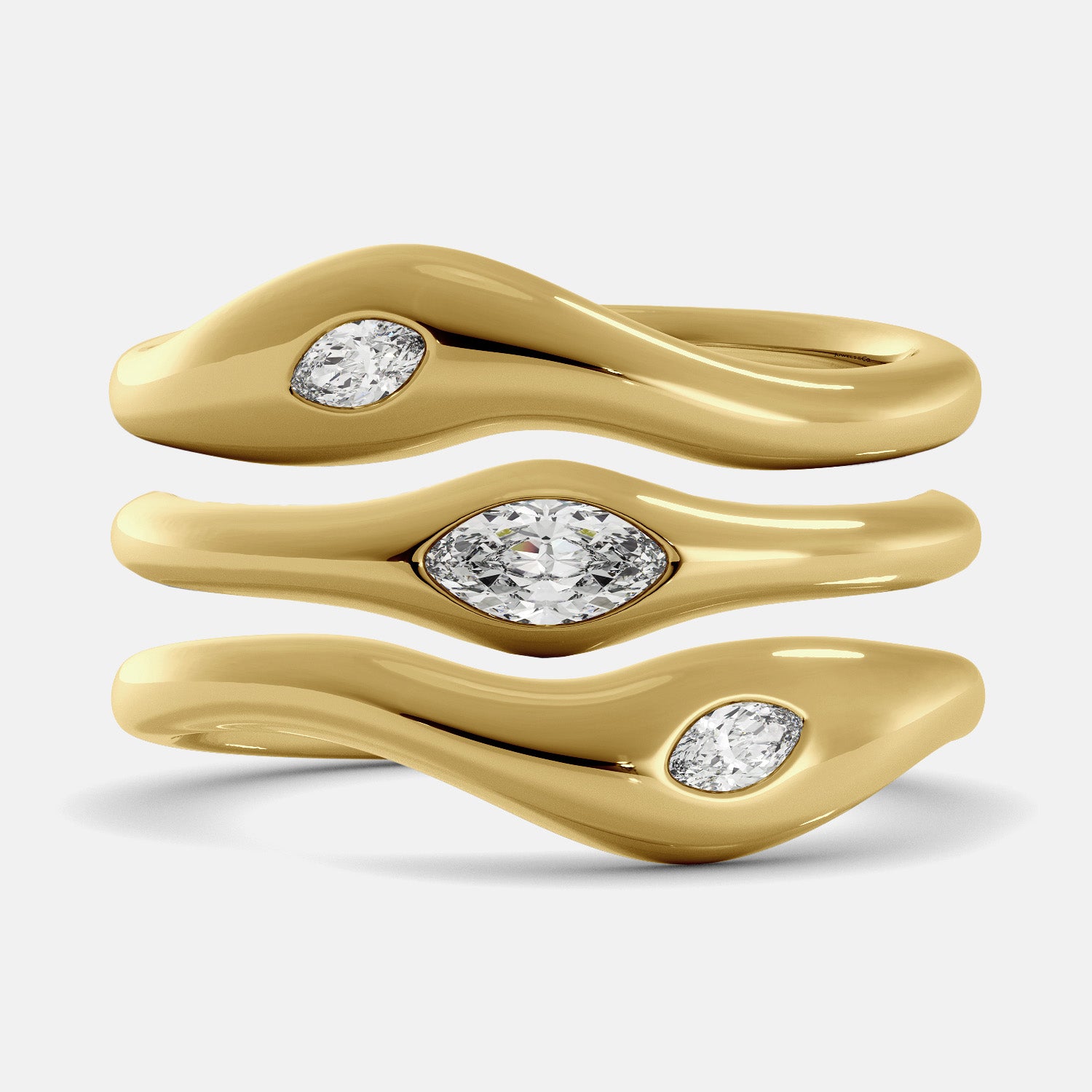
a band shaped to follow the curve of the engagement ring setting, fitting neatly alongside it without a gap. particularly effective for vintage and antique settings where the profile isn't uniform. the band and ring look designed for each other rather than placed next to each other — our calm sea ring, from the waves of life collection, is a good example of that wave-contour shape.

A delicate pavé or milgrain band
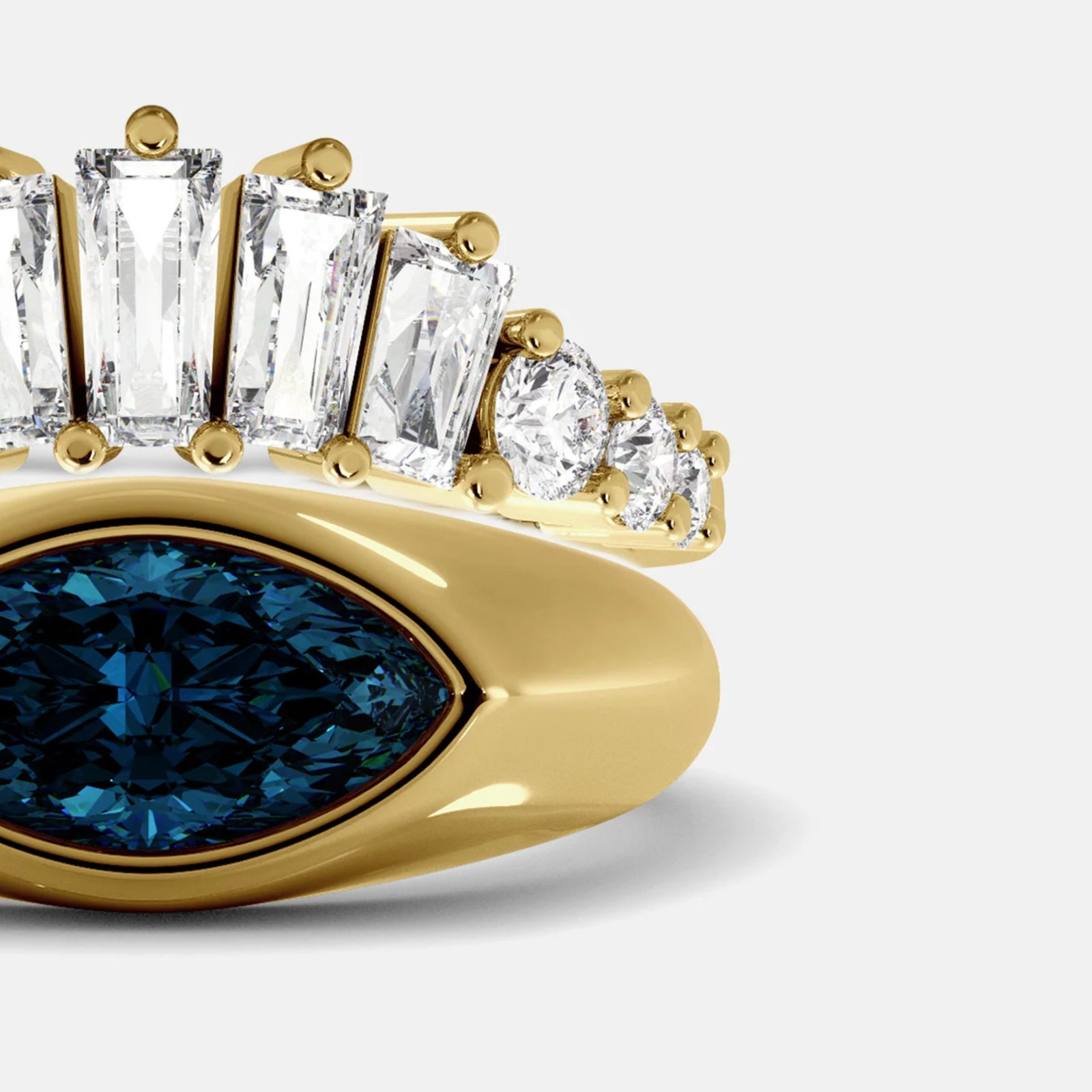
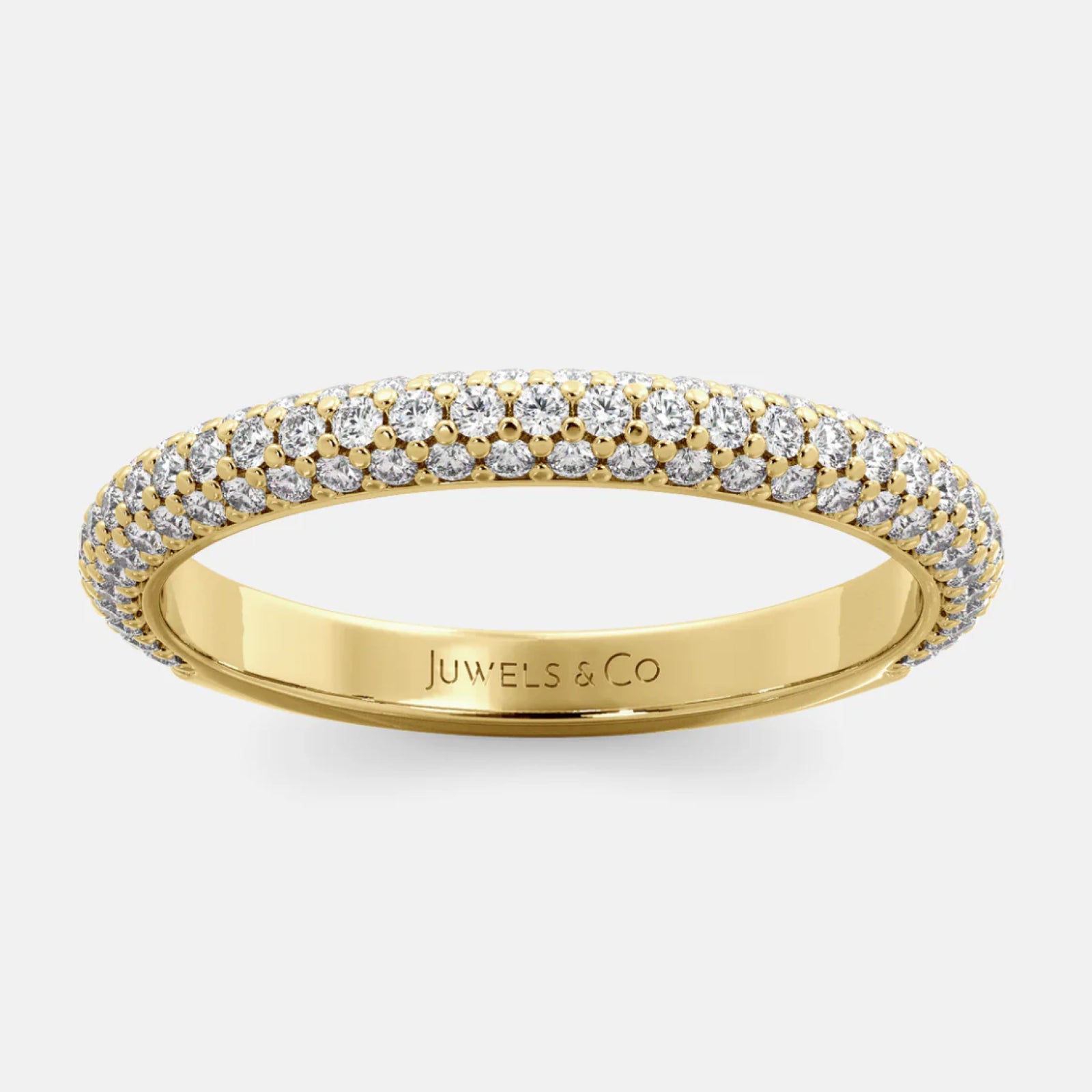
small diamonds or a milgrain edge add texture and light without competing with the main stone. vintage-appropriate and visually cohesive with the old mine cut's softer glow. milgrain — the beaded metal edging found on antique jewelry — is particularly resonant with a hand-cut diamond from the same era. our forevermore pavé eternity band is a solid gold, three-row take on this direction.
An antique or estate band
for someone who chose a vintage engagement ring, an antique-feeling band is a natural continuation of the same instinct. old cut diamonds, period-inspired metalwork, or a two-stone design all sit naturally alongside an old mine cut. the aesthetic logic is already there.

why the band is often overlooked
most people spend months choosing an engagement ring. the wedding band typically gets a few weeks — sometimes less. it's an afterthought in a process where it shouldn't be.
the band is what you actually wear every day. it sits against your skin, against the engagement ring or on its own, and against everything else you stack. it has to fit correctly, wear comfortably, and look right not just at the wedding but in twenty years.
the most common mistake is choosing the band in isolation — finding something that looks nice on its own without considering how it sits alongside the engagement ring. a band that's too wide. a profile that leaves a gap. a metal that doesn't match. these things are small in isolation and noticeable every time you look at your hand.
the engagement ring is the piece everyone sees in the photograph. the band is the piece you actually live with — and getting it right matters just as much, whether you wear it stacked or, like taylor swift reportedly did, as its own piece.
at juwels & co, we've always believed that the band conversation should start at the same time as the engagement ring conversation. not after. the two pieces are worn together — or worn as a considered pair, even apart — and they should be designed with that in mind from the start.
wedding band styles explained
Plain band
a smooth, unadorned band in yellow, white, or rose gold. the most classic and versatile option. width matters — too wide and it competes with the engagement ring; too narrow and it disappears. typically 1.5mm–2.5mm is the right range for everyday wear alongside an engagement ring with presence.
Pavé band
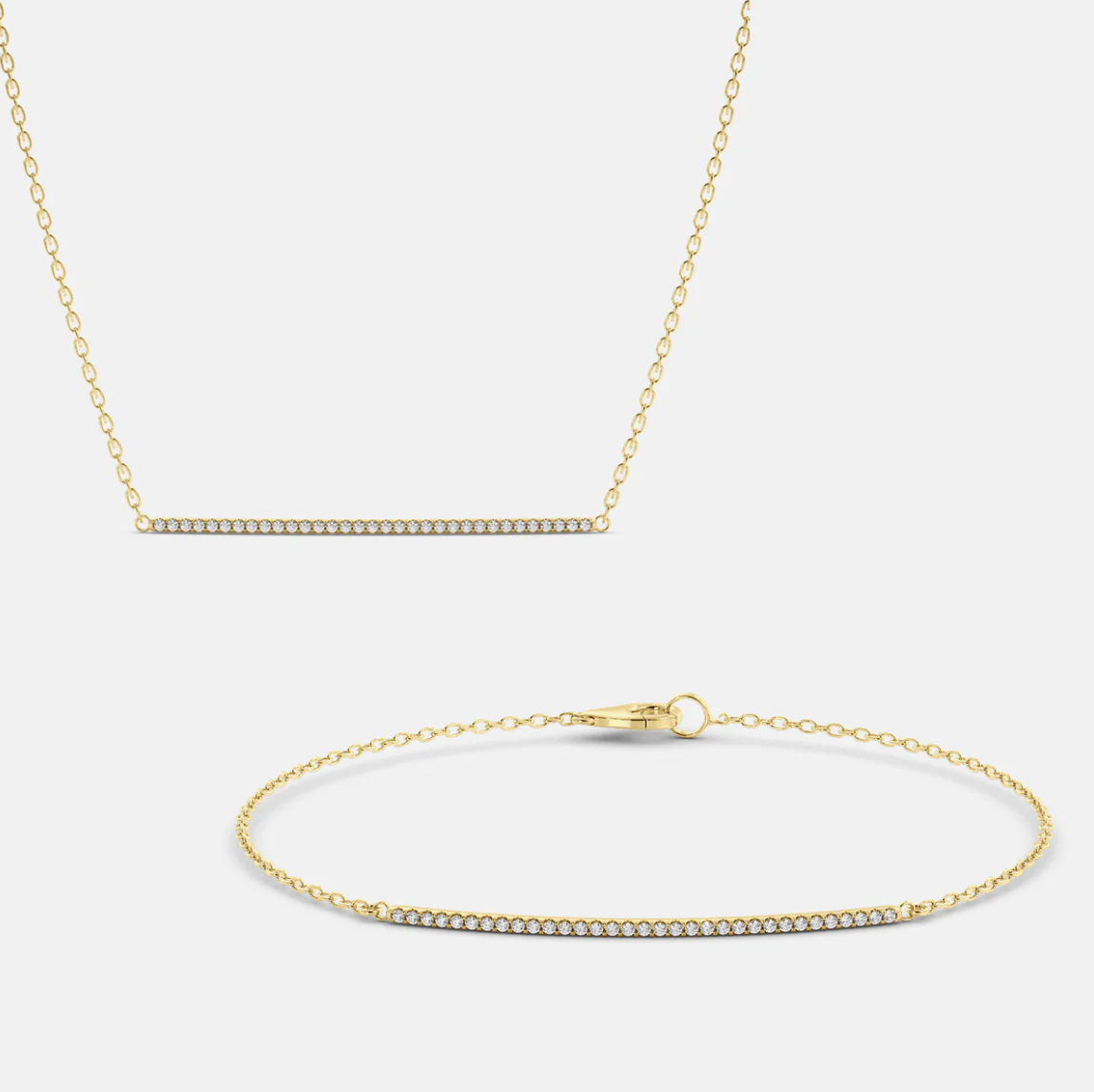
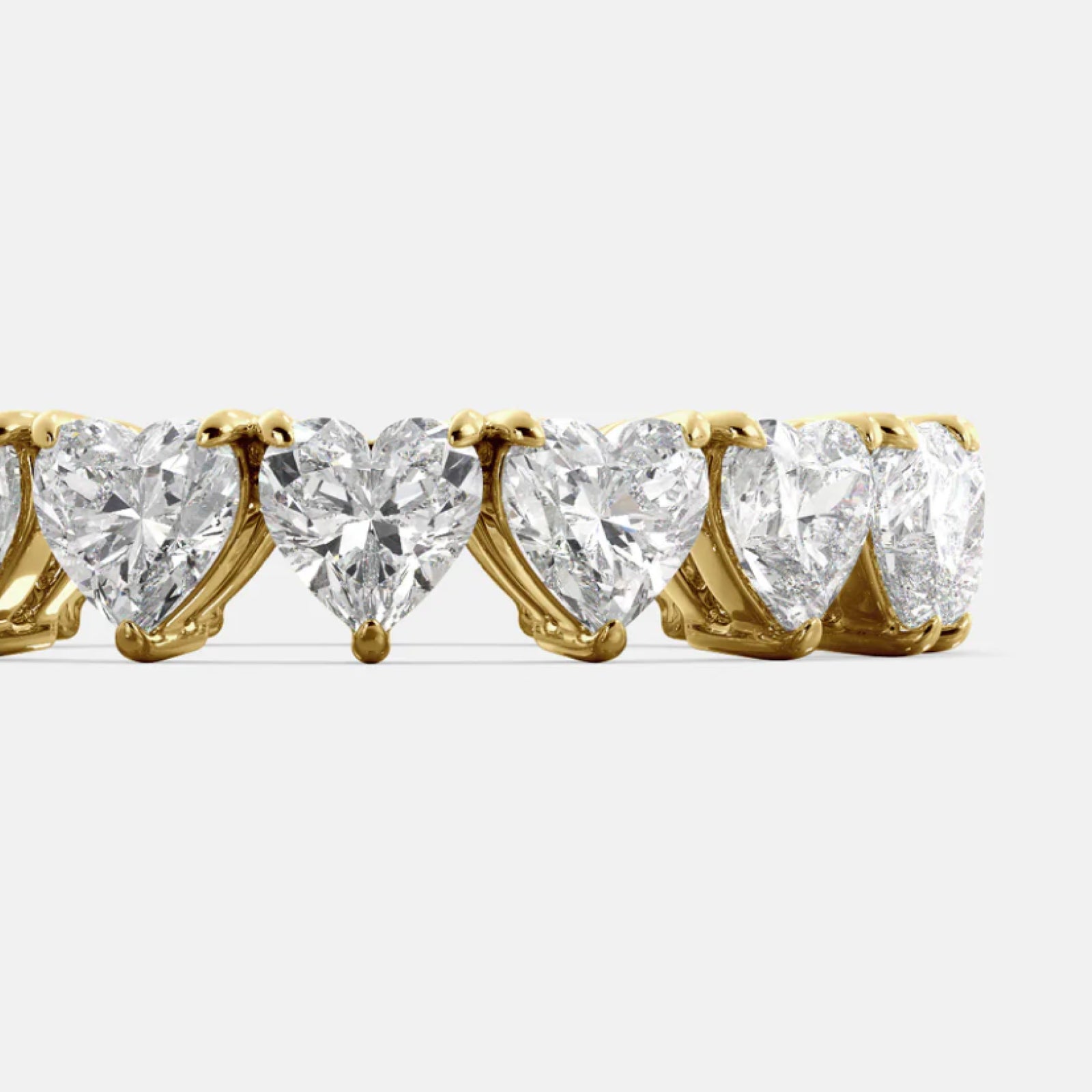
small diamonds set closely together across the surface of the band, creating a continuous line of sparkle. adds significant light to the stack without a large stone. works well alongside solitaires and vintage cuts where you want more sparkle without another center stone.
Half-eternity band
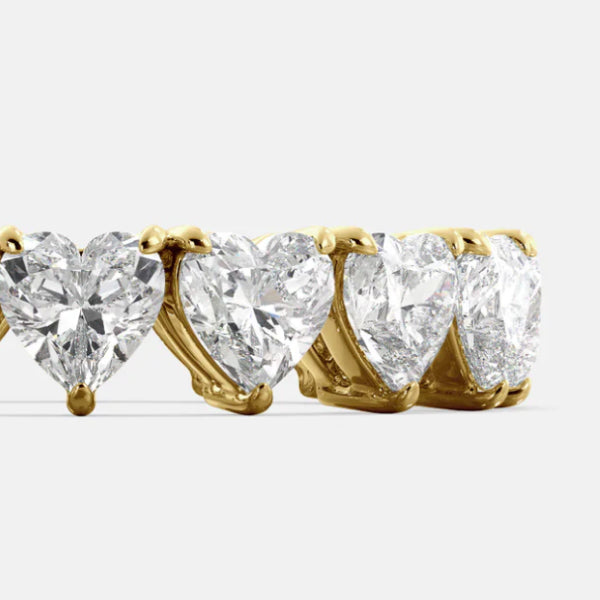
diamonds set across the top half of the band (the visible portion when worn). more comfortable than a full eternity for rings that need resizing over time. visually similar to a full eternity; practically more flexible.
Full eternity band
diamonds all the way around the band. the most substantial and symmetrical option. beautiful and significant — but cannot be resized once made, so sizing has to be precise. a strong visual statement alongside a vintage or colored stone ring, like our forevermore eternity band.
Milgrain band
a plain or pavé band with a beaded metal edge — a technique associated with antique and edwardian jewelry. adds texture and vintage character without additional stones. particularly well-suited to old mine cut and old european cut rings where period-appropriate detailing creates visual cohesion.
Shaped or contour band
a band with a curved or angled profile designed to follow the shape of a specific engagement ring. removes the gap between ring and band and creates the appearance of a single designed set. requires more planning — the band is made to fit the engagement ring rather than fitting any ring.
how to choose a band for your ring
the right band depends on what you already have — and whether you plan to wear it stacked. these are the questions worth asking before you decide.
1. Does the profile fit?
hold your engagement ring face-down on a flat surface. look at its profile from the side. some settings sit high; some sit low; some have an irregular silhouette. a straight band will leave a gap alongside a high or irregular setting if you plan to stack. a contour band follows the shape and eliminates the gap. knowing your ring's profile determines which band styles are even viable.
2. Does the metal match?
yellow gold alongside yellow gold, white gold alongside white gold. mixing metals can work intentionally, but it requires care — a rose gold band against a yellow gold setting will look mismatched unless the contrast is deliberate and the two pieces are clearly designed to be together. when in doubt, match the metal exactly.
3. Does the width feel right?
try different widths before deciding. a band that's 1.5mm sits differently than one that's 3mm — on the hand and alongside an engagement ring. narrower bands tend to be more versatile and age better; wider bands make more of a statement but can overwhelm a delicate engagement ring. the engagement ring should remain the lead piece.
4. Will it wear well daily?
the band is worn every day, often on the dominant hand, often through the same activities as the engagement ring. solid gold is the right material — it doesn't wear through the way plated metals do. comfort fit (a slightly rounded interior) makes a meaningful difference for a ring worn daily. prongs, if any, should be checked annually.
5. Have you thought about the long term?
ring sizing changes over time. a half-eternity band can be resized; a full eternity usually cannot. if there's any uncertainty about sizing, a half-eternity or plain band is a more practical long-term choice. the band you choose at 28 needs to still work at 48 — that's the timeframe it's designed for.
how we think about it at juwels & co
when someone comes to us for an engagement ring, the band is already part of the conversation. not as an upsell — as a design consideration.
the two pieces will be worn together — or as a considered pair — for decades. they should be thought about together from the beginning. that means knowing the profile of the setting before the setting is finished. it means asking about metal preference once, not twice. it means thinking about whether the stone and setting leave room for a straight band or whether a contour would serve better.
it also means being honest about timing. a custom band takes 4–8 weeks. if the wedding is in three months and the engagement ring was just chosen, the band conversation needs to start now, not after the engagement ring arrives.
the engagement ring is the piece of the story everyone talks about. the band is the piece that holds the story together — worn every day, for the rest of your life, whether or not it's ever stacked. it deserves the same intention.
every juwels & co band is handcrafted in solid 14k gold in our los angeles studio. made to order, sized to your hand, and — when relevant — designed to complement a specific engagement ring rather than just any ring. if you have a piece from us already and are thinking about the band, reach out. julia will look at your ring and talk through what actually works.
frequently asked questions
about taylor swift's wedding
when and where did taylor swift and travis kelce get married?
what wedding band did taylor swift actually wear?
what style of wedding band works with an old mine cut engagement ring like taylor swift's?
about choosing a wedding band
should a wedding band match the engagement ring?
how wide should a wedding band be?
what is the difference between a half-eternity and a full eternity band?
when should i start thinking about my wedding band?
can a wedding band be custom made to fit an existing engagement ring?
does juwels & co make wedding bands?
the band is part of the story too
worn stacked, or worn as its own statement
solid 14k gold, handcrafted in los angeles. every band made to order — designed to work with your ring, for the long term.
explore wedding bands → design your own →


