































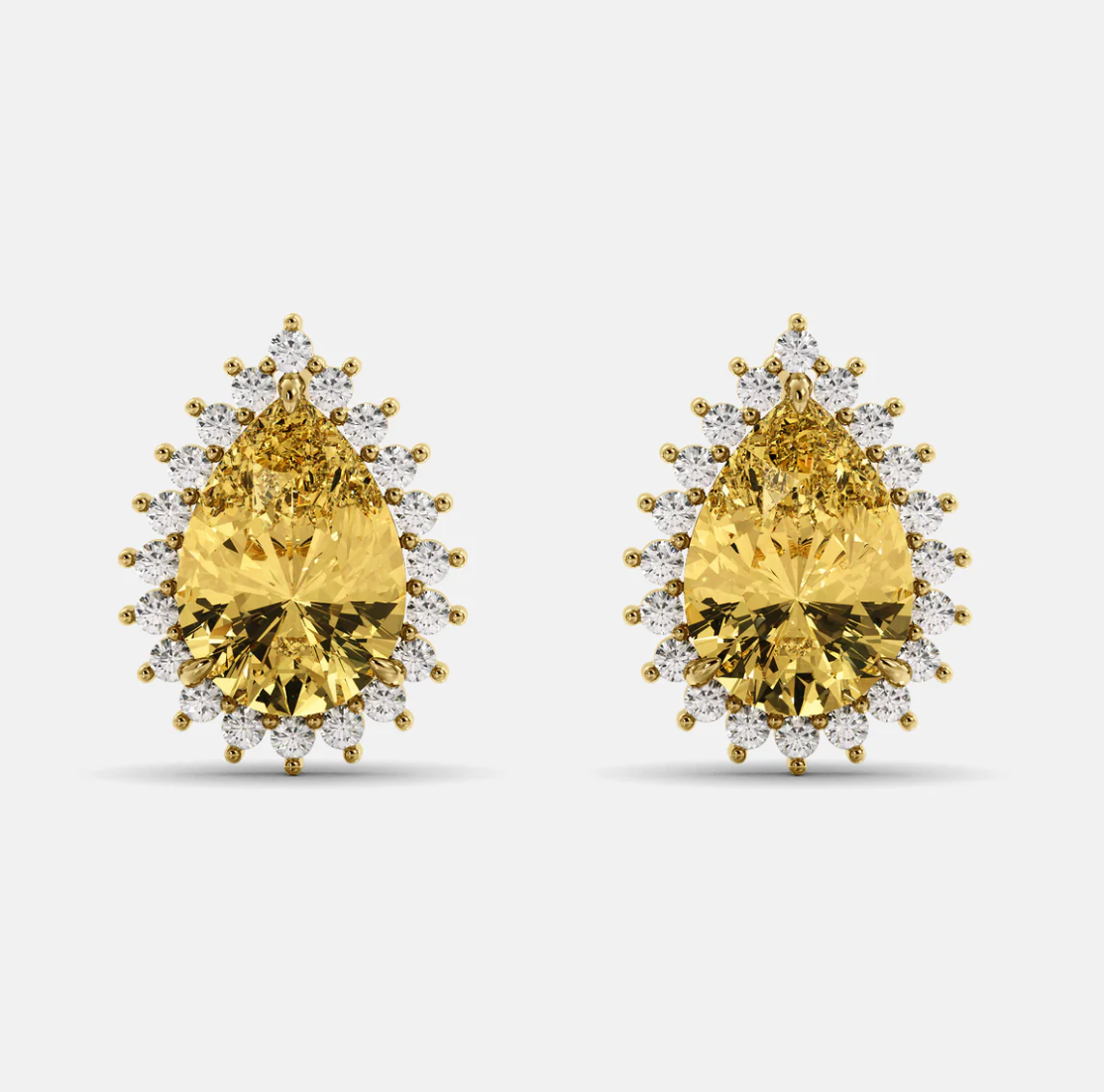

the honest answer to one of the most common jewelry questions we get: what actually happens to solid gold and platinum in the pool, ocean, hot tub, and sauna — and which pieces need the most protection.
solid 14k gold and platinum are among the most durable materials used in fine jewelry. but durable doesn't mean indestructible — and certain environments accelerate wear in ways that aren't obvious until a prong loosens or a stone dulls.
pools, hot tubs, the ocean, and saunas come up more than almost anything else in the questions we receive about jewelry care. the answers aren't always simple, because the metal, the stones, and the specific environment all matter. here's what you actually need to know.

the short answer
- Pool or hot tub remove your jewelry. chlorine attacks the alloy metals in gold over time, weakening settings and dulling stones. a single session won't destroy a piece, but regular exposure accumulates.
- Ocean or sea swimming remove your jewelry — for two reasons. saltwater is mildly corrosive over time, and the risk of losing a piece in the water is significant. cold water contracts fingers and rings slip off more easily than you'd expect.
- Sauna or steam room remove your jewelry. high heat causes metal to expand, makes rings difficult or impossible to remove, and can damage certain gemstones directly. the metal surface also heats to an uncomfortable temperature against skin.
- Fresh water (shower, lake, river) solid gold and platinum are generally safe in fresh water without chemicals or extreme temperatures. showering with fine jewelry is lower risk than pools or the ocean — though over time, soaps and shampoos can build up in settings and dull stones.
chlorine — pools and hot tubs
chlorine is the primary concern in swimming pools and hot tubs, and it's worth understanding exactly why.
solid gold — whether 14k or 18k — is an alloy. pure gold (24k) is too soft for jewelry, so it's mixed with other metals: silver, copper, zinc, or palladium depending on the color and karat. these alloy metals are what chlorine attacks. the gold itself is largely resistant; the metals mixed with it are not.
with repeated exposure, chlorine can:
- Weaken prongs and settings prongs are the first structural element to show the effects of chlorine exposure. they become brittle, thin, and eventually unable to hold stones securely. a prong failure is often invisible until a stone is already missing.
- Cause surface discoloration repeated chlorine exposure can cause a dull, slightly greenish or darkened appearance on gold — particularly on rose gold, where the copper content is higher. this is surface-level and can often be polished out, but it's a sign of ongoing damage to the alloy.
- Affect clasps and hinges the moving parts of a piece — a bracelet clasp, a necklace toggle, earring backs — are often more vulnerable than the main setting because they involve thinner metal and more exposed surfaces.
platinum is more resistant to chlorine than gold alloys, but it is not immune. repeated pool exposure causes microscopic surface wear that builds up over time, dulling platinum's natural luster and eventually requiring professional polishing to restore.
hot tubs compound these effects: higher water temperatures accelerate chemical reactions, and the elevated chlorine levels used to maintain hot tub hygiene are typically higher than in standard pools.
saltwater — ocean and sea swimming
saltwater is less chemically aggressive than chlorinated water for most fine jewelry — solid gold and platinum don't corrode in seawater the way base metals do. but ocean swimming carries two other significant risks.
The loss risk
cold water causes fingers to contract. a ring that fits perfectly at room temperature can slip off easily in the ocean — often without you noticing until you're already back on shore. this is the most common way fine jewelry is lost at the beach. if a piece has significant monetary or sentimental value, the ocean is not a safe environment for it.
The cumulative effect
saltwater itself is mildly corrosive over extended, repeated exposure. for most solid gold and platinum pieces worn occasionally, the risk is low. for pieces worn daily in an ocean environment — living near the sea, surfing regularly — the cumulative effect on settings and clasps is real, and more frequent professional cleaning and checking is warranted.
sand is also a concern. fine sand particles act as an abrasive against metal surfaces and can scratch both the metal and certain softer gemstones. pieces worn during beach activities accumulate sand in settings, which should be rinsed and cleaned promptly afterward.
saunas and steam rooms
the concerns in a sauna are different from those in water — heat rather than chemical exposure — but the recommendation is the same: remove your jewelry.
Heat expansion
metal expands when heated. a ring that fits comfortably at room temperature will feel noticeably tighter in a sauna and may be difficult or painful to remove once swollen fingers add to the effect. this is one of the few jewelry care situations where there's also a direct physical risk to the wearer, not just to the piece.
Surface temperature
metal conducts heat efficiently. in a sauna, the surface of a ring or necklace can become uncomfortably or even painfully hot against skin — particularly thicker pieces with more metal mass. this is most noticeable with wide bands, heavy chains, and large settings.
Gemstone sensitivity
certain gemstones are directly affected by high heat. fracture-filled stones (common in commercial emeralds), oiled stones, and composite or assembled stones can have their treatments degraded by repeated heat exposure. even stable natural stones can experience thermal shock if moved quickly from extreme heat to cold — for example, from a sauna directly into a cold plunge.
steam rooms add moisture to the heat, which can accelerate tarnishing on silver and accumulate in settings.

what about the gemstones?
the metal in a piece is generally more resilient than the stones. when thinking about pools, ocean, and saunas, the gemstone considerations are often the deciding factor for whether to remove a piece.
- Diamonds the most stable of all gemstones — unaffected by chlorine, saltwater, or sauna heat at the temperatures and concentrations found in normal use. the stone itself is not the concern; the setting holding it is.
- Sapphires and rubies corundum is extremely hard and chemically resistant. natural sapphires and rubies are stable in all of these environments. heat-treated stones (the majority of commercial stones) are stable post-treatment. the setting is again the primary concern.
- Emeralds most commercial emeralds are oiled or resin-filled to improve their appearance. chlorine and heat can degrade these treatments over time, causing the stone to appear more included or dull. emeralds should always be removed before pools, hot tubs, and saunas.
- Pearls and opals organic stones that are sensitive to chemicals, heat, and dryness. chlorine, saltwater, and sauna heat will all damage pearls and opals — sometimes irreversibly. these should never be worn in any of these environments.
- Morganite, aquamarine, and other beryls stable in water, but most commercial stones in this family have been heat-treated, and some may be sensitive to sauna temperatures. remove before saunas as a precaution; pool and ocean exposure is lower risk.
- Turquoise, coral, and amber porous organic or semi-organic materials that absorb chemicals from pool water and are damaged by heat. none of these should be worn in pools, hot tubs, the ocean, or saunas.
care after exposure
if a piece has been in a pool, the ocean, or a sauna — intentionally or accidentally — the following steps will minimise any ongoing damage.
Immediate rinse
rinse the piece in clean, lukewarm fresh water as soon as possible after exposure to chlorine or saltwater. this removes the chemical residue before it has time to sit against the metal and settings.
Gentle clean
a small drop of mild dish soap in warm water, a soft brush around settings and prongs, a thorough rinse, and a careful dry with a soft lint-free cloth. never air dry — water left sitting in settings can leave mineral deposits that build up over time.
Check the settings
after any significant exposure, gently press each stone side to side. there should be no movement at all. if a stone rocks or clicks, a prong has loosened and the piece needs to be seen by a jeweler before it's worn again.
Professional clean when needed
pieces worn regularly near pools, the ocean, or in hot climates benefit from a professional clean and setting check once or twice a year. this catches prong wear before it becomes a missing stone, and keeps the piece looking as good as it did the day it was made.
at juwels & co, we offer complimentary cleaning advice and can guide you through the right care for any piece in our collection. reach out at
hello@juwels.co with any questions about a specific piece.
frequently asked questions
can you wear 14k gold jewelry in a swimming pool?
can you wear gold jewelry in the ocean?
does chlorine damage solid gold jewelry?
is platinum safe to wear in a pool?
can you wear jewelry in a sauna?
what happens if you wear a ring in the sauna?
can you shower with gold jewelry on?
how do I clean gold jewelry after it's been in the pool or ocean?
pieces built to last — with the right care.
solid 14k gold, handcrafted in los angeles. questions about caring for a specific piece or stone? we're here.


